
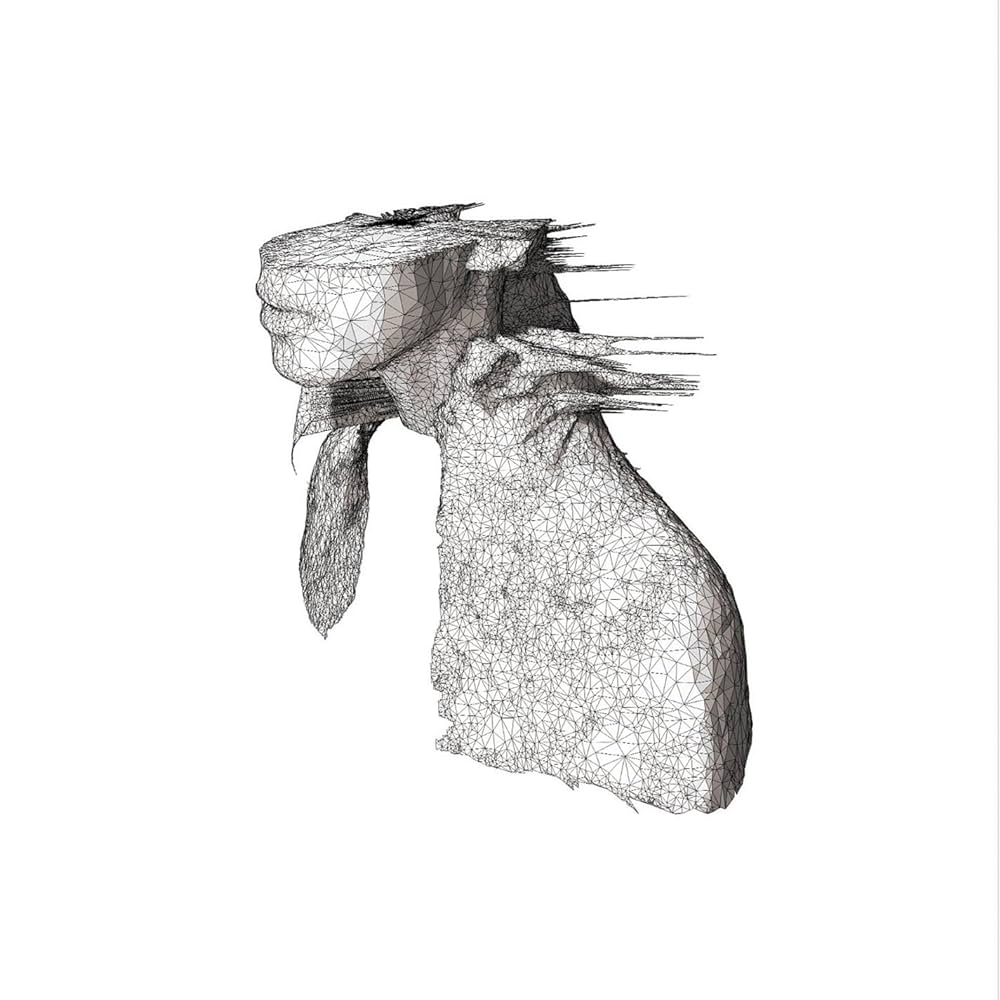
 The rise of an authentic and promising band. COLDPLAY - A RUSH OF BLOOD TO THE HEAD (2002) After a promising start with their debut album, Parachutes, in 2000, Coldplay seems to have become aware of their own potential, shedding their shyness and embarking on a majestic journey in A Rush of Blood to the Head, their second studio album (released on August 26, 2002), produced by the band and producer Ken Nelson. The album opens with its most epic moment: "Politik," with the band's powerful entrance giving way to Chris Martin's first verses accompanied by the piano — an instrument used much more than in Parachutes. The group returns in full force for the chorus: "Open up your eyes...," Martin repeats vehemently, awakening the listener. A strong song that also holds space for the poetic: in a new arc, the piano returns even more beautifully, guiding the way for Johnny Buckland's sublime entrance, allowing Martin to reach his best moment: "Give me love over this...," he sings in a chilling melody, until the band reunites to close the piece. Probably the best introduction to an alternative rock album. Next, Will Champion sets the pace of "In My Place" alone, as if in a rehearsal. This leads to another triumphant entrance by Johnny with his riff, allowing Martin to insist on how lost he was: "Yeah!" he peaks but remains troubled: "How long must you wait for it...?" he questions, while the band stays in sync but lacks ideas to fill the brief, repetitive guitar solo. With acoustic guitar chords repeated exhaustively, "God Put a Smile upon Your Face" emerges with curious verses and rhymes, highlighting: "God put a smile upon my face...," until the song gains strength in the chorus and asserts its idea, but the acoustic chords insist on returning with the same beat, causing uncertainty until its conclusion, making way for the album's most beautiful song: "The Scientist," with its romanticism and beautiful piano chords dictating the rhythm throughout the song. "Nobody said it was easy...," Martin sings in a beautiful and dazzling moment, showcasing the album's quality. In "Clocks," the piano takes the spotlight again: this time, not with marked chords, but with the most significant piano movement since Elton John, opening a song made to shine, especially on stage, as it is inviting, serious, and distinct, reflecting this evolved Coldplay, now more relaxed and ready to embrace success, body and soul. Red lights seem to illuminate the song, while a sense of brotherhood fills the air. This paves the way for "Daylight" with an unusual guitar solo and atypical melody, with verses that celebrate the moment: "To my surprise and my delight, I saw sunrise... I saw sunlight...," he recites, when the chorus illuminates the song as if the sun had truly risen from the horizon: "Oh, the sun will shine... yes, on this heart of mine...," he sings louder, in the song's most attractive part, which eventually falls into a not-so-attractive repetition trap, tiring the journey. "Green Eyes" then appears, with its sweet verses sung by Martin, accompanied only by the guitar in an intimate and acoustic moment, being the album's most genuine stage until the song suddenly grows without warning, like a burden to be carried. But Martin returns smoothly, declaring uniquely and authentically: "Honey, you are a rock upon which I stand...," erasing any doubts about the journey's value. Midway through, "Warning Sign" appears like a cover, despite being an original song: its atmosphere resembles something by The Verve, while its romantic melody fills the environment and stirs emotions, especially when Martin recites: "When the truth is... I miss you. Yeah, the truth is I miss you so...," in a well-polished construction, until the protagonist takes a moment for himself and sings softly, alone at his piano, the final verses: "Yeah I crawl back into your open arms...," giving way to "A Whisper" to invade the scene, as if uninvited, imposing its new order with its fast rhythm and a resounding guitar while Martin tirelessly repeats: "Whisper, whisper, whisper..." in another excess, similar to "Daylight." But this time, the song's construction is less engaging, sounding like a garage band risking a heavier sound during their euphoric and tumultuous rehearsals after the band's creative process. The title track ("A Rush of Blood to the Head") rescues the atmosphere of "God Put a Smile upon Your Face," but with its own brilliance, being more successful in its initial verses and radiating virtue in its development, making it the most interesting alternative song on the album and, consequently, the biggest surprise of the journey: "So I’m gonna buy a gun and start a war if you can tell me something worth fighting for...," the protagonist cites, ready to unleash all his aspiration, leaving his repressed stage behind, enough to let the piano of "Amsterdam" take charge of the conclusion, like a private concert by Chris Martin for his loyal audience, singing softly with his now inseparable instrument. The band gradually joins in for the ending, accompanying the vocalist's solitary verses, now determined to break free from the past's shackles: "I'm tired of secrets...," he says, until affirming: "I stayed in the corner, tied to the noose...," and finally emphasizes: "You came along and cut me loose...," untying the knot that bound Coldplay itself. ★★★★ (out of 5 stars) Coldplay Reviews: Parachutes (2000), A Rush of Blood to the Head (2002), X&Y (2005), Viva la Vida or Death and All His Friends (2008), Mylo Xyloto (2011), Ghost Stories (2014), A Head Full of Dreams (2015), Kaleidoscope EP (2017), Everyday Life (2019), Music of the Spheres (2021), and Moon Music (2024). |

